
Hydroponic Gear for Beginners
Practical help choosing the equipment you actually need — without overspending on gear that can wait.
Starting hydroponics does not require a complicated collection of equipment. The right setup depends on the system you choose, the plants you want to grow, and how much monitoring you want to do.
These guides focus on the essentials first: the equipment that helps beginners get started successfully, along with the tools that can be added later as your system grows.
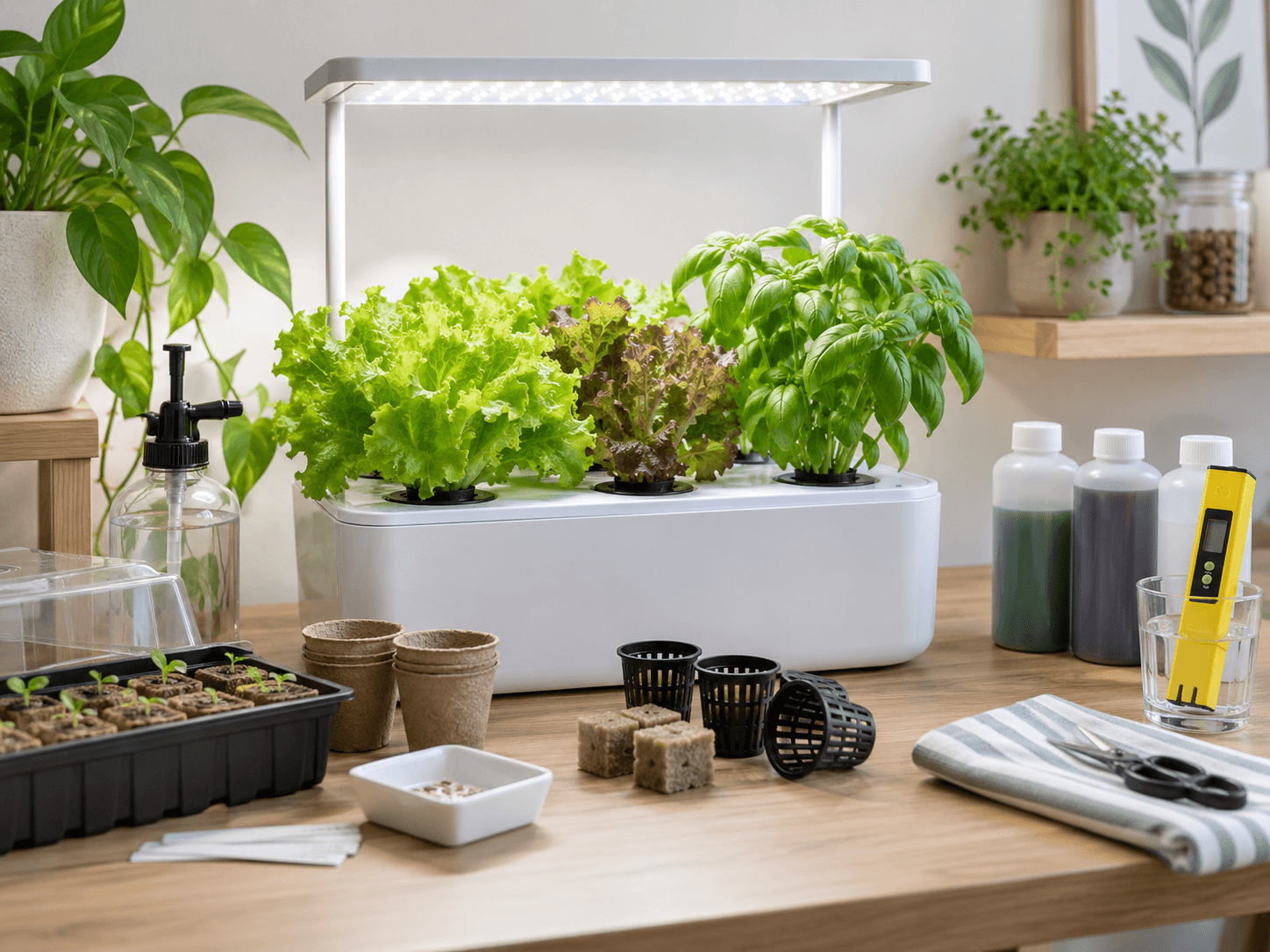
Build Your First Hydroponic Setup
Start with the basics. Learn which pieces of equipment are essential, which are optional, and what you can safely skip when building your first system.
Choosing a Grow Light for Hydroponics
Learn what matters when choosing a grow light, including coverage, intensity, hanging height, and what beginners can safely skip.
pH and EC Testing Tools
You do not need a complicated monitoring setup. Start with the basic tools that help you keep nutrient strength and pH in a healthy range.
Nutrients and Growing Supplies
Start with a simple nutrient formula and a few basic supplies. You can always add specialty products later as your system grows.
Recommended Beginner Gear
Affiliate Disclosure: As an Amazon Associate I earn from qualifying purchases. This means I may earn a commission if you purchase through links on this page, at no additional cost to you.
Hydroponic Systems
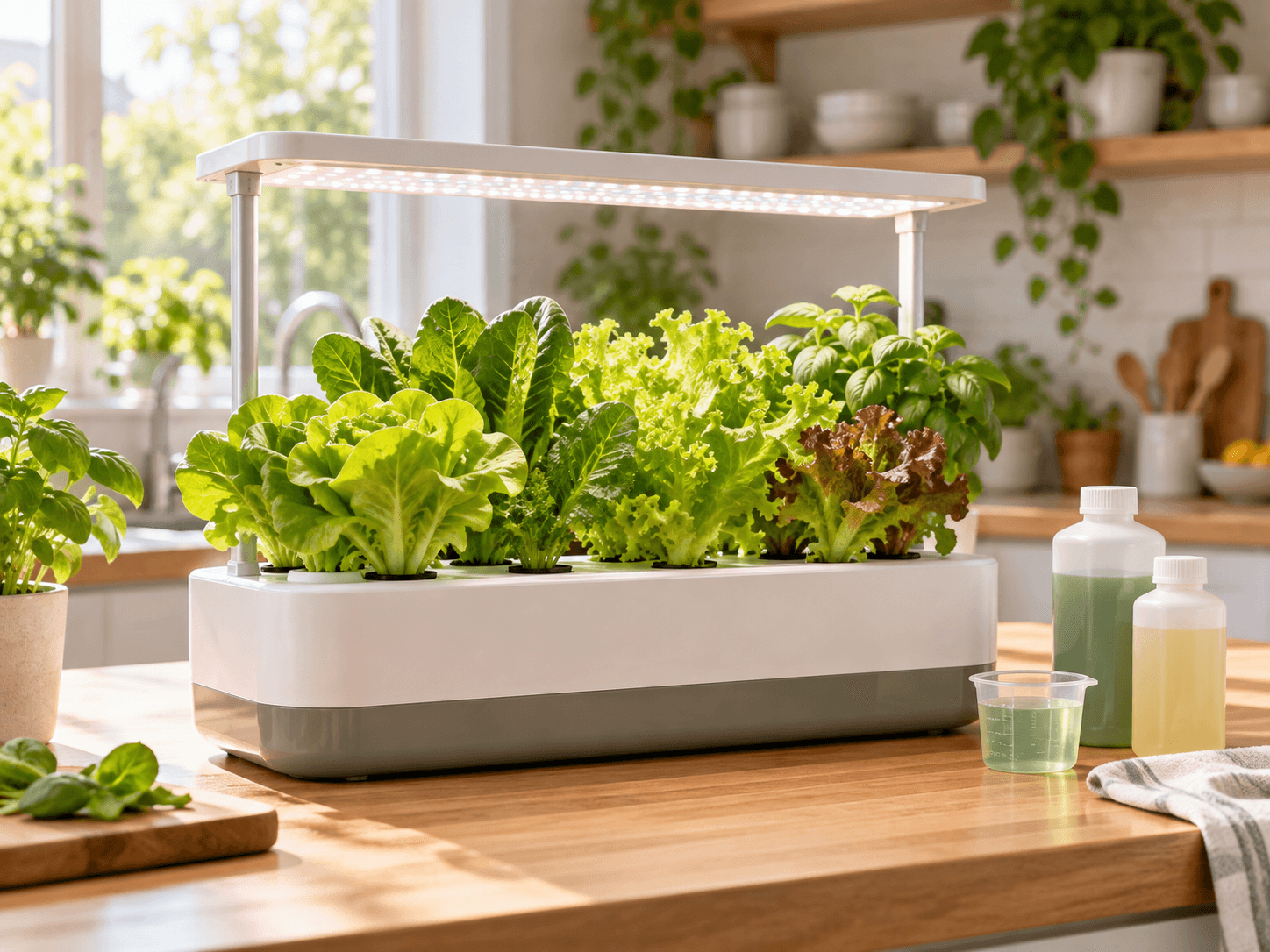
For a first setup, an all-in-one countertop system is one of the easiest ways to get started. These systems combine the reservoir, grow light, and plant sites into one package.
Systems
Beginner Indoor Hydroponic Systems
All-in-one indoor gardens combine the reservoir, grow light, plant sites, and water circulation in one compact setup. Ahopegarden offers several sizes, making it easy to match a system to your space and the number of plants you want to grow.
Best for: Beginners who want a mostly self-contained system rather than assembling individual components.
Grow Lights
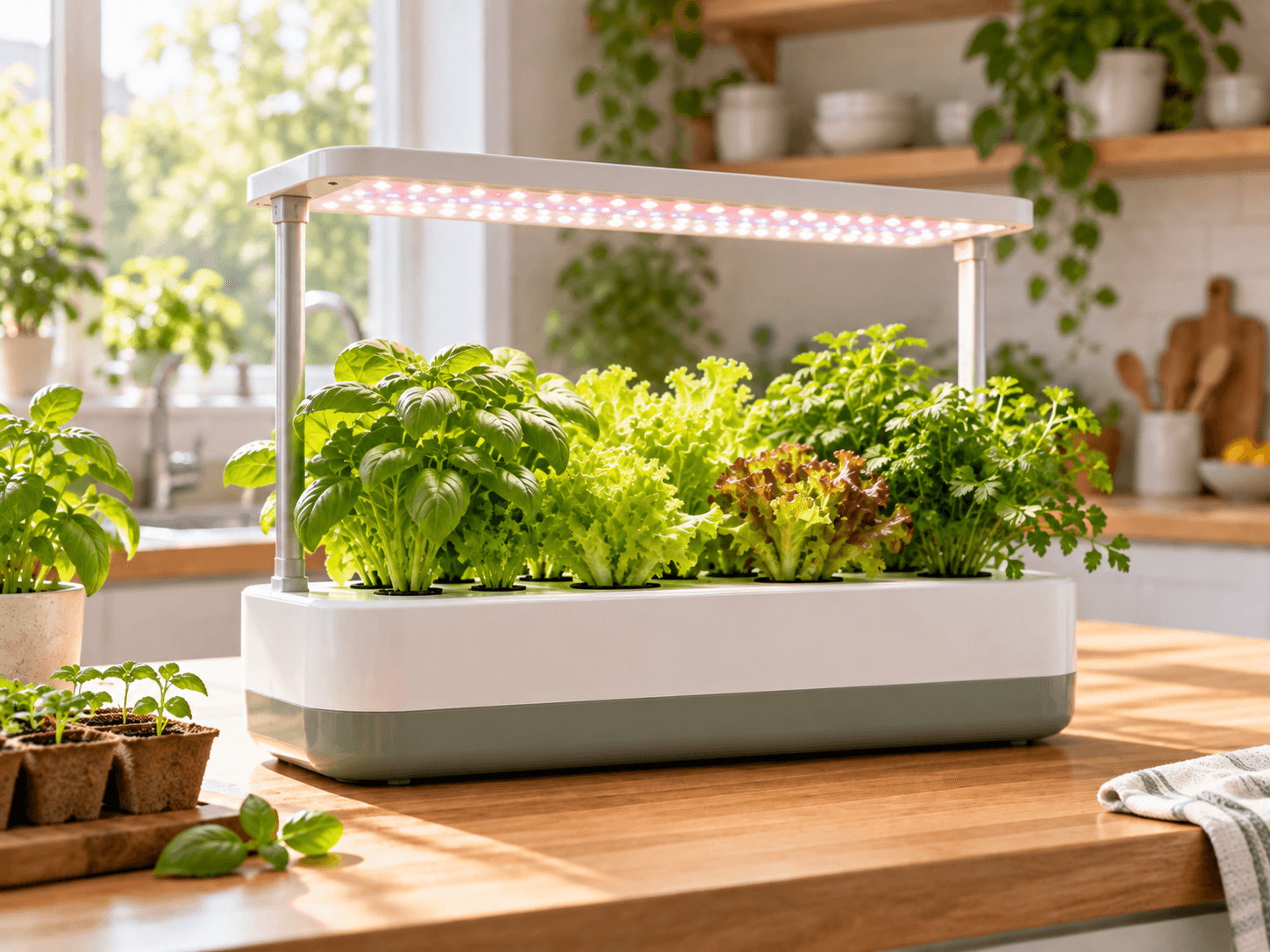
Beginner LED Grow Lights
A good grow light gives hydroponic plants the consistent light they need when natural sunlight isn’t enough. For beginners, an LED grow light is usually the easiest choice because it runs efficiently, produces less heat, and works well for herbs, lettuce, and other compact crops.
Best for: Beginners growing indoors who need reliable light without a complicated setup.
pH/EC Testing
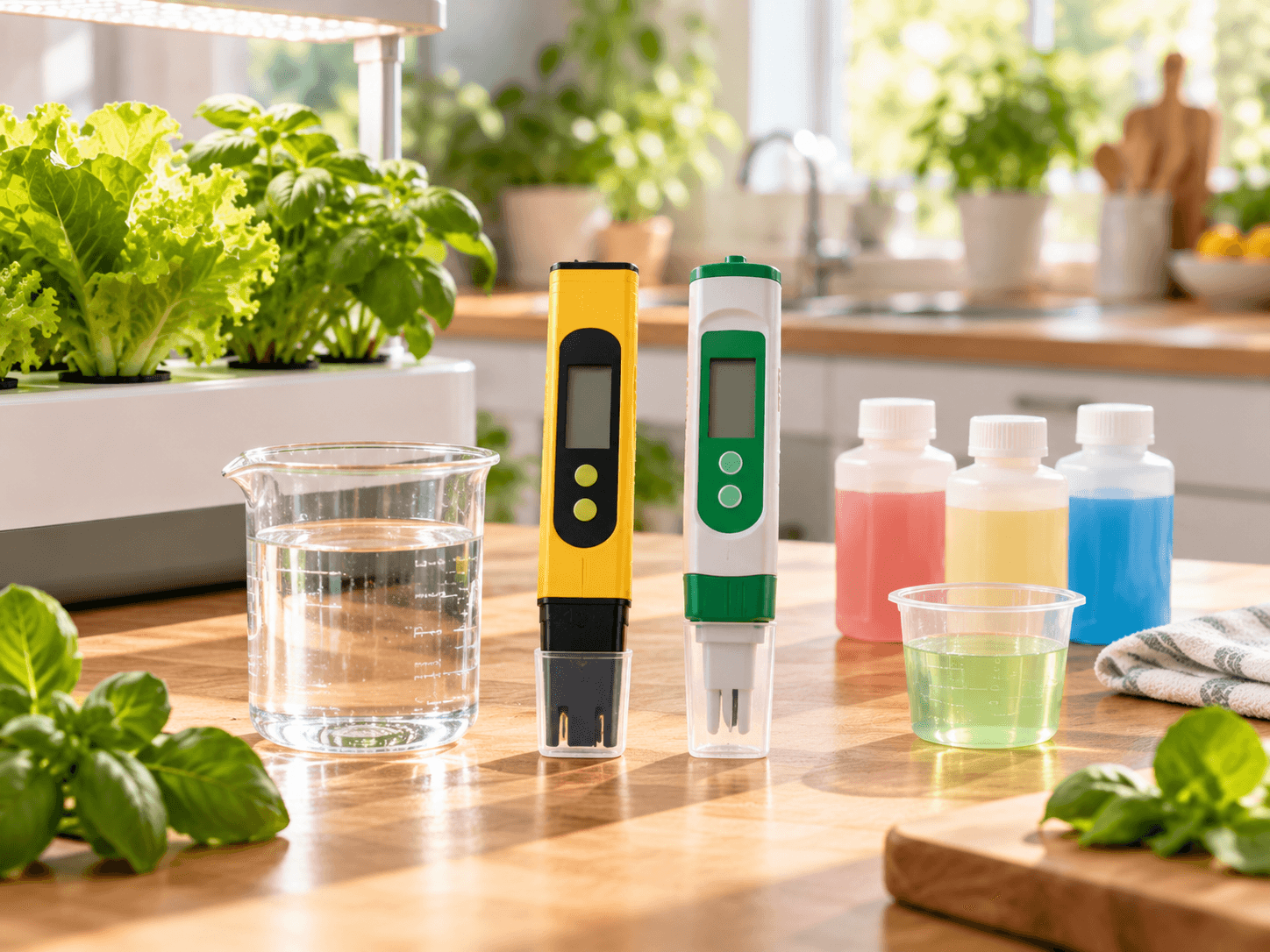
Beginner pH and EC Testing Tools
Keeping nutrient solution in the right range is one of the most important parts of hydroponics. A simple pH meter and EC or TDS meter can help you check water conditions, spot problems early, and make more confident nutrient adjustments.
Best for: Beginners who want an easier way to monitor nutrient strength and water balance.
Nutrients
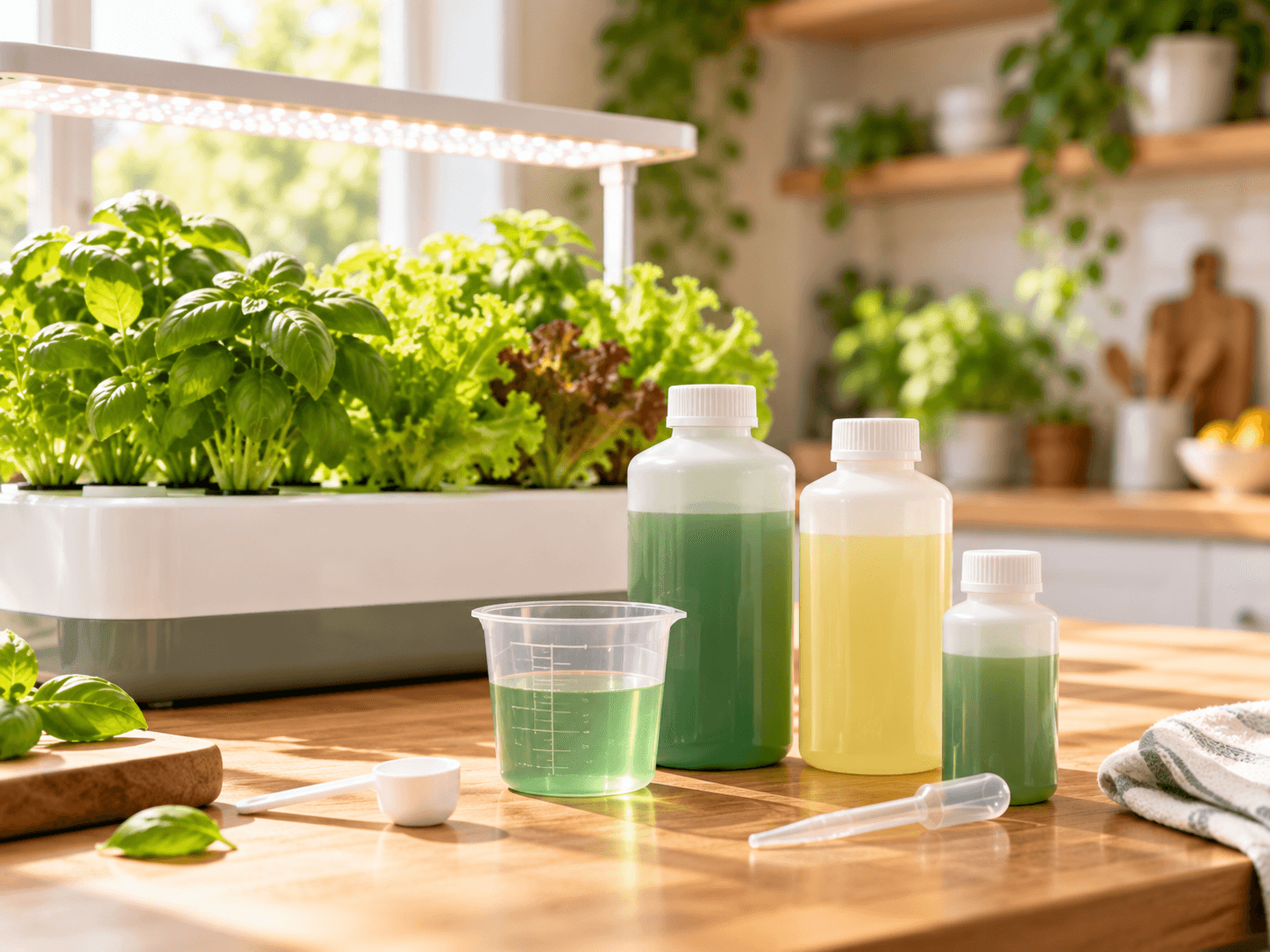
Beginner Hydroponic Nutrients
Hydroponic plants depend on a balanced nutrient solution instead of soil. Beginner-friendly nutrient formulas make it easier to provide the essential minerals plants need without mixing a complicated custom blend.
Best for: First-time growers who want a straightforward nutrient program.
Beginner Hydroponic Growing Media
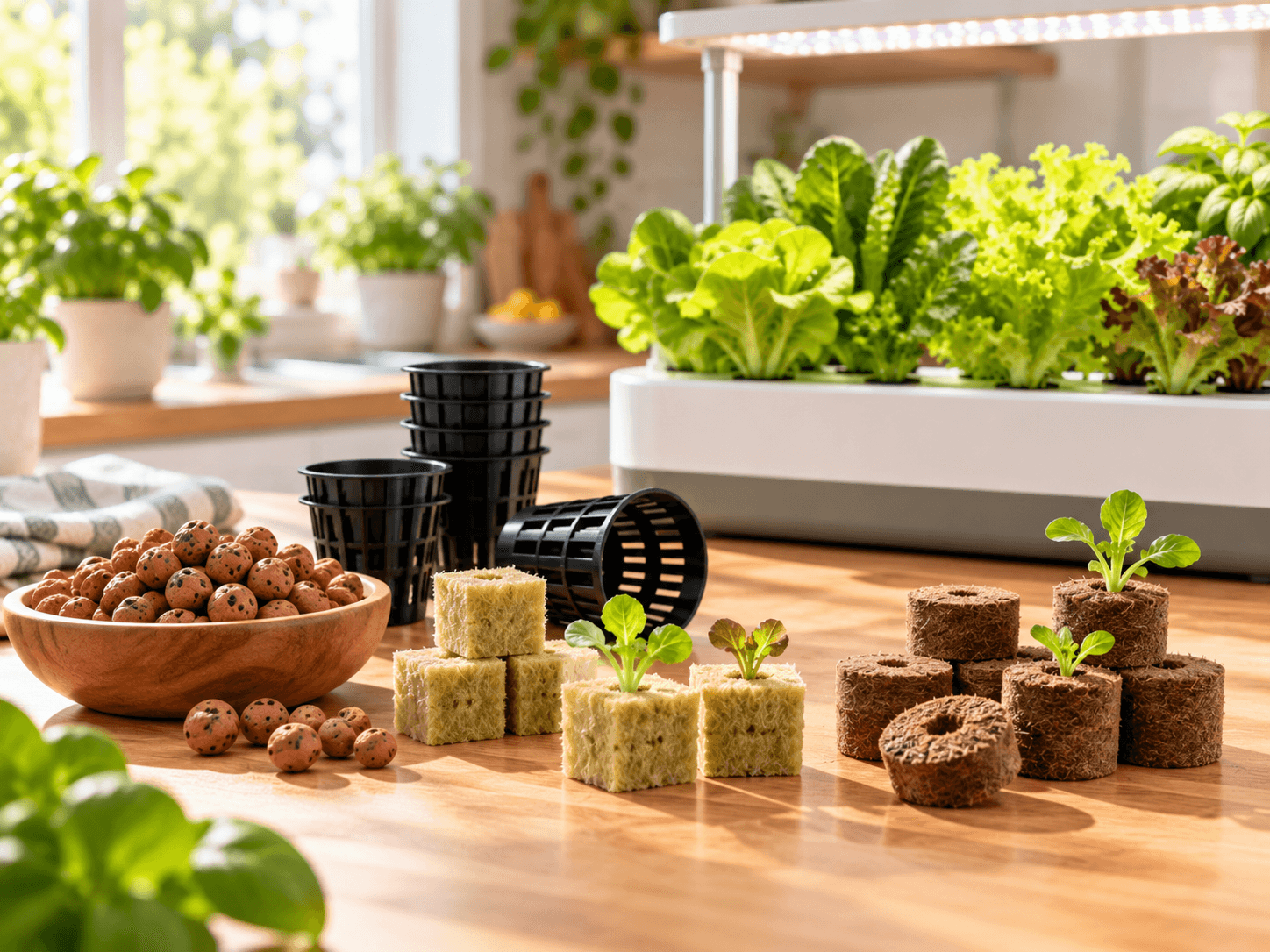
Hydroponic plants still need support around their roots even though they aren’t growing in soil. Beginner-friendly options such as clay pebbles, coco coir, and starter plugs help hold plants in place while allowing water, nutrients, and oxygen to reach the root zone.
Best for: Beginners who need a simple, reusable or easy-to-handle medium for starting and supporting hydroponic plants.
Air Pumps and Aeration Supplies
Beginner Pumps
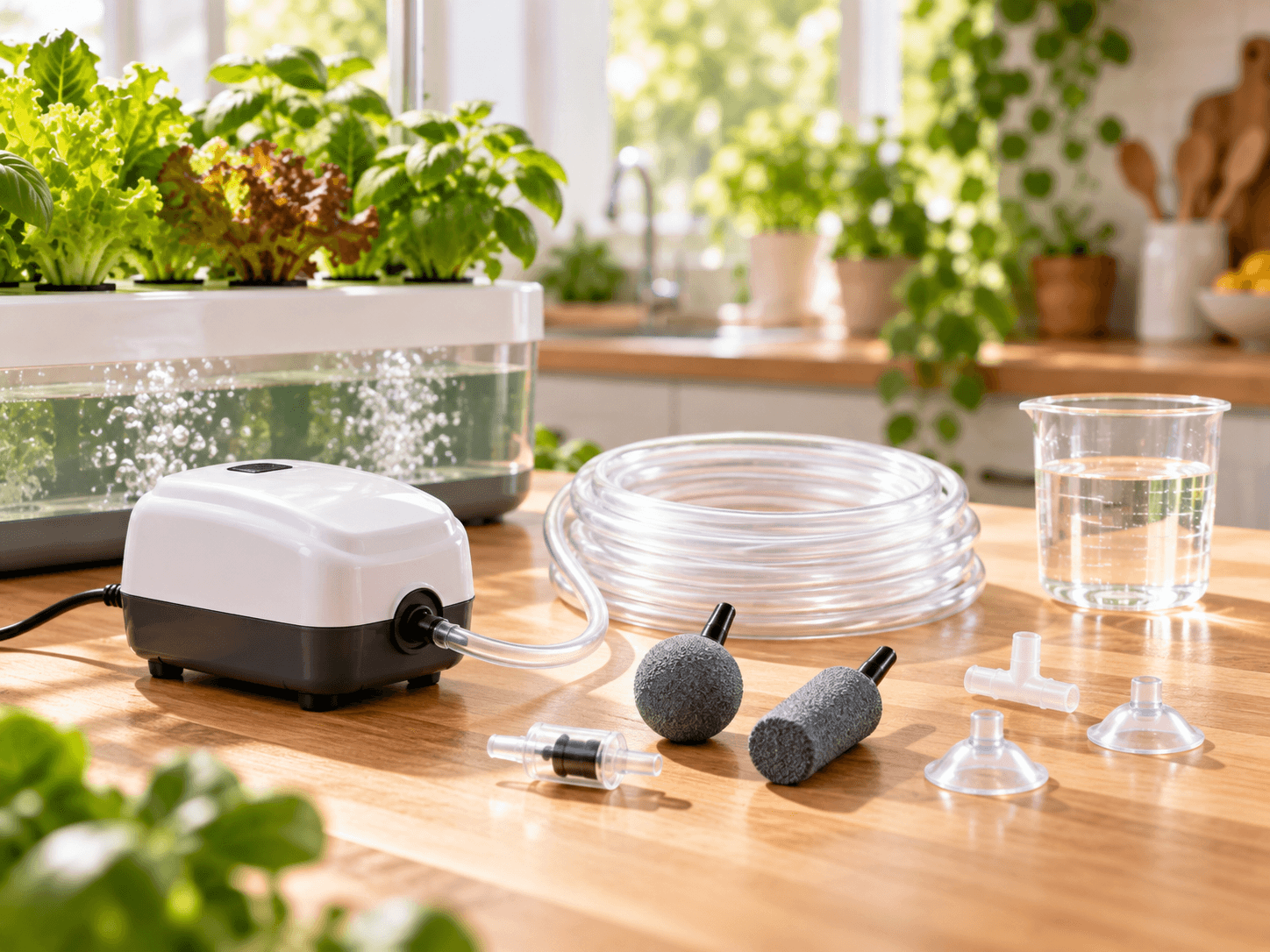
Aquarium-style air pumps are commonly used in DWC and other hydroponic systems to keep oxygen moving through the nutrient solution.
Best for: DWC buckets and reservoirs that need continuous aeration.
Start With the Basics
You can add more equipment later. For your first system, focus on choosing a simple setup, reliable lighting, proper nutrients, and basic monitoring.
Home Hydroponics Hub
Practical guides, gear recommendations, and step-by-step help for growing hydroponically at home.
© 2026 Home Hydroponics Hub. All rights reserved.